Submit a news tip or story directly by texting us at: 301-500-0440
Greenland Deal
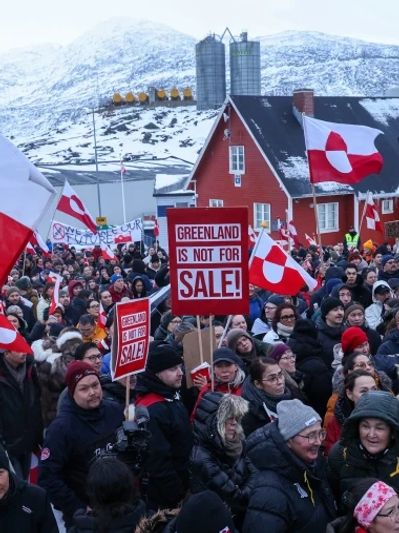
Trump Threatens Tariffs on European Allies Over Greenland Deal
Written By Kendesi Mohammed
President Donald Trump announced that the United States will impose a new 10 percent tariff on imports from Denmark and seven other European countries Norway Sweden France Germany the United Kingdom the Netherlands and Finland as leverage to force negotiations over the purchase of Greenland saying the duties would rise to 25 percent on June 1 if no deal is reached. Trump framed the move as a national security issue arguing that U.S. ownership of Greenland is strategically important amid growing Arctic competition from Russia and China. European leaders strongly rejected the proposal stressing that Greenland is not for sale and condemning the tariffs as coercive and damaging to transatlantic relations and NATO unity while warning the policy could trigger economic retaliation and deepen diplomatic tensions between the United States and Europe.
#Greenland #Trump #Tariffs #USForeignPolicy #TransatlanticRelations #NATO #Europe #Denmark #GlobalTrade #Geopolitics #ArcticStrategy #InternationalRelations
Trump’s Pressure on the Caribbean
Trump’s Pressure on the Caribbean: Challenges and Vulnerabilities
Written By Kendesi Mohammed
Former U.S. President Donald Trump’s policies placed significant pressure on Caribbean nations through a combination of economic, military, and diplomatic measures. Economically, his administration imposed new tariffs on key Caribbean exports, including petroleum, agricultural products, and manufactured goods, raising costs for local producers and threatening fragile post-pandemic recovery. Countries like Guyana, Barbados, and Jamaica were directly affected, prompting regional leaders to call for trade diversification and highlighting the Caribbean’s vulnerability to unilateral U.S. policy decisions.
Beyond economics, Trump’s administration exerted geopolitical and strategic pressure, particularly in connection with Venezuela. U.S. military operations in Caribbean waters, including naval deployments and seizures of oil tankers, disrupted regional energy and shipping networks, impacting nations like Cuba that relied on Venezuelan oil. Diplomatically, these actions strained relations with CARICOM governments, reviving fears of coercive policies reminiscent of the Monroe Doctrine. Overall, Trump’s approach combined economic leverage and military posturing, creating widespread uncertainty and tension across the Caribbean.
#Caribbean #ClimateChange #USPolitics #Trade #Tourism #Venezuela
#EconomicPressure #GlobalPolitics #RegionalStability #Sovereignty #Migration #CaribbeanNews

FAIR SHARE
If Donald Trump Is Right: What a “Fair Share” World Could Mean for America and Global Stability
Written By Kendesi Mohammed
Former President Donald Trump has long been vocal about his belief that the United States pays disproportionately for global security and economic stability. From NATO contributions to trade agreements and military deployments, Trump argues that America bears the lion’s share of the costs while other nations benefit with minimal accountability. But what would the world and America look like if Trump’s vision were fully realized?
The “Fair Share” Principle
At the heart of Trump’s foreign policy philosophy is the idea that allies and trading partners should contribute more fairly to collective goals. In practice, this could mean:
- NATO allies increasing their defense spending to meet or exceed the two percent of GDP benchmark.
- Strategic trade partners entering agreements that favor balanced, reciprocal economic benefits rather than longstanding trade deficits.
- Countries hosting U.S. military bases compensating for the costs of American presence and defense infrastructure.
If implemented successfully, proponents argue that this approach would reduce the fiscal burden on U.S. taxpayers while incentivizing allies to take more responsibility for their own security. Critics, however, warn that pressuring allies could strain diplomatic relationships and weaken long-standing alliances.
Military Strategies and Global Influence
Trump’s approach to military engagement has been described as America First pragmatism. He seeks to avoid long, indefinite wars, demands clear objectives, and leverages strength to negotiate from a position of power. This includes:
- Using economic sanctions and tariffs as tools of influence before considering military intervention.
- Prioritizing targeted operations and technological superiority over large-scale troop deployments.
- Pressuring foreign nations to take responsibility for their regional security challenges.
If Trump’s strategies work as intended, the United States could potentially reduce overseas deployments and cut military spending while maintaining strategic deterrence. This approach could also signal a shift in global power dynamics, with nations reassessing the risks and costs of conflict when facing a more transactional U.S. posture.
Economic and Political Predictions
Assuming Trump’s vision succeeds, several outcomes could follow:
- Global financial shifts. Countries that have historically relied on U.S. military protection without proportionate contributions may face increased pressure to spend more on defense, potentially reshaping regional budgets and alliances.
- Trade realignments. U.S. trade deficits could decrease as America renegotiates deals, possibly leading to higher costs for imported goods but greater domestic manufacturing and job growth.
- Military modernization. A focus on strategic technologies, cyber defense, and high-precision forces could reduce traditional troop requirements while making the U.S. military leaner, faster, and more lethal.
- Diplomatic tensions. Allies may resist perceived coercion, and adversaries might test U.S. commitments, creating a delicate balance between strength and isolation.
The Predictive Outcome
If Trump is correct in asserting that a “fair share” world can work, America could emerge stronger financially and militarily, paying less while compelling allies to take responsibility for their own security. However, this approach is not without risk. It could temporarily unsettle alliances, provoke economic pushback, or embolden adversaries testing U.S. resolve.
Ultimately, the question is whether a more transactional, high-stakes approach to international relations could produce a safer, wealthier America, or whether it risks destabilizing the very alliances and systems that have maintained global order since World War II. Only time will tell if Trump’s vision translates into a practical, sustainable reality or remains a bold prediction with mixed outcomes.
Conclusion
Trump’s emphasis on fairness, military prudence, and economic leverage represents a clear break from conventional diplomacy. If it works, the United States may achieve both fiscal relief and strategic advantage. But, as with any major shift in policy, the global community’s reaction and America’s ability to manage it will determine whether this vision succeeds or falters.
#DonaldTrump #AmericaFirst #ForeignPolicy #USMilitary #GlobalSecurity #TradeDeals #MilitaryStrategy #EconomicPolicy #FairShare #WorldPolitics #NATO #Geopolitics #Predictions #USDefense #StrategicLeadership


The Impact of George Floyd’s Death
The Lasting Impact of George Floyd’s Death: A Movement That Shook the World
Written By Kendesi Mohammed
On May 25, 2020, George Floyd, a 46-year-old Black man, died in Minneapolis under the knee of a police officer. What followed was not just outrage; it was a global reckoning. Floyd’s death became the spark for one of the largest social justice movements in modern history, igniting protests, conversations, and reforms around racial inequality, policing, and systemic injustice.
A Global Uprising
In the days and weeks following Floyd’s death, protests erupted across the United States in over 2,000 cities and towns. Demonstrators from all walks of life joined, demanding justice not just for Floyd, but for countless others who had suffered similar fates at the hands of law enforcement. The movement quickly transcended U.S. borders, with solidarity marches taking place in countries across Europe, Africa, Asia, and South America. Social media amplified the movement, making it impossible for the world to look away.
The Movement Beyond Protests
The George Floyd protests were part of the broader Black Lives Matter movement, which has been active since 2013. While BLM existed prior, Floyd’s death gave the movement a new global urgency. The protests fueled conversations about racial inequity in housing, education, healthcare, and criminal justice. Corporations, universities, and local governments began reassessing policies to address systemic bias, diversity, and inclusion.
Police reform became a central demand. Some cities and states passed new legislation aimed at increasing accountability, banning certain police practices, and investing in community-led public safety programs. Though progress has been uneven, Floyd’s death fundamentally shifted the conversation around policing in America.
Cultural and Societal Shifts
The movement also had a profound cultural impact. Art, music, literature, and film began reflecting the renewed call for justice. Everyday citizens engaged in activism through voting, volunteering, and raising awareness, demonstrating that social change can be a collective effort. Importantly, Floyd’s death and the movement it inspired reminded society of the human cost of systemic racism, transforming abstract statistics into a vivid, urgent reality.
A Historical Turning Point
Comparisons to the Civil Rights Movement of the 1960s are inevitable. While both fought against racial injustice, the George Floyd protests were immediate, digitally amplified, and globally resonant. The speed at which millions mobilized and the breadth of their reach was unprecedented. While the long-term outcomes are still unfolding, the movement has already reshaped conversations about race, policing, and equity.
Conclusion
George Floyd’s death was a tragedy, but it became a catalyst for a worldwide movement demanding justice, equality, and systemic change. The protests highlighted not only the deep-rooted issues in American society but also the power of collective action in driving change. While the fight is far from over, Floyd’s legacy endures in the voices raised, policies reconsidered, and awareness awakened. The world witnessed a profound moment of reckoning, one that will echo for generations to come.
#GeorgeFloyd #BlackLivesMatter #JusticeForGeorgeFloyd #EndRacism #PoliceReform #Equality #SocialJustice #HumanRights #BLM #StandForJustice #NoJusticeNoPeace #ChangeTheSystem #RacialEquity